Your Guide to Storm Damage Insurance Claims
A home is one of the most significant purchases for most people throughout their lifetime. It is an exciting time that also comes with a lot of responsibilities. The roof is one of them.
A total roof replacement is another big purchase for homeowners that they will likely only do once or twice. Regular maintenance is essential for extending the life of a roof. Having a good insurance policy and understanding when to use it further supports this effort helping homeowners save money on roof repairs and replacements.
Naturally, roofs will get damaged throughout the years, so how do you utilize your insurance when it is time to file a claim?
Roof Damage
Taking care of your roof has enormous benefits that help it last a long time. Unfortunately, no matter how well taken care of, roofs and damage go hand-in-hand. A roof is constantly exposed to outside elements, protecting you and your family. Because of this, the roof can take a beating in its lifetime.
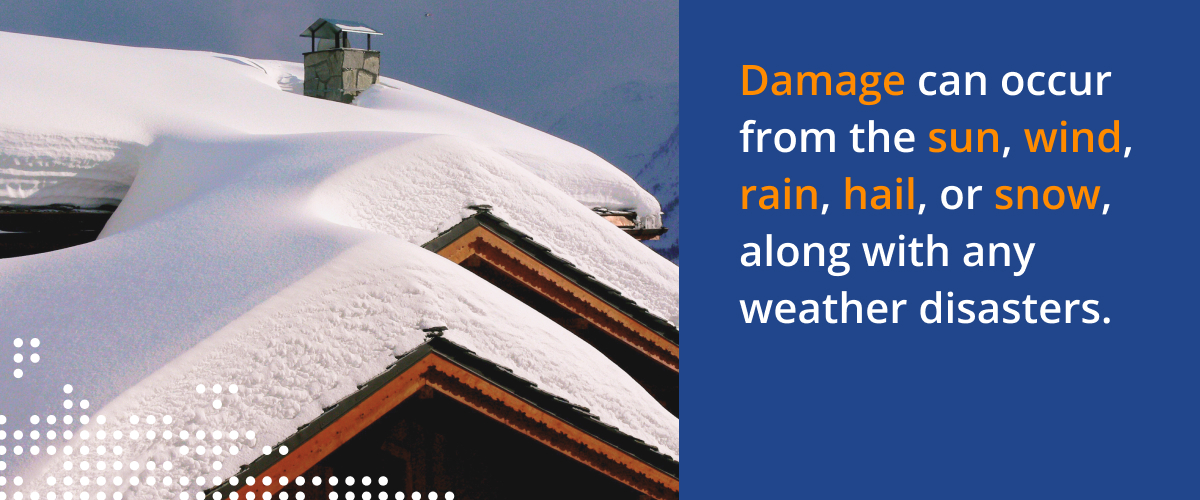
The damage will vary depending on the roof’s material, the area’s climate, and the roof’s integrity before any storm or harsh weather. Damage can occur from the sun, wind, rain, hail, or snow, along with any weather disasters that may be common in your area.
Damage can also occur from fire, vandalism, or objects falling onto the roof, such as a tree.
Insurance
No matter the type of insurance, it’s not always obvious to figure out how to use it to your advantage. Homeowners insurance is no different. What storm damage to a roof is covered by insurance? If you’ve never filed before, it can feel overwhelming.
Here are some factors to consider and steps to take when filing a storm damage-related insurance claim for your roof.
Look Over Your Policy
Insurance policies may vary. Before filing a claim, you must understand your home insurance policy and what damage it covers. Filing a claim will inevitably increase your rates, so you want to ensure you only file for covered expenses and more extensive claims.
Homeowners’ insurance typically covers common types of roof damage, such as hail, wind, or snow, that might occur in a specific season or an extreme weather event. However, if your roof shows neglect or lacks upkeep, your insurance provider will likely not cover the damage.
For this reason, we recommend having your roof inspected annually by a professional to perform any maintenance tasks that may be necessary. If you have minor, low-cost repairs, it is often better to pay for them yourself to avoid increasing your insurance payments.
More extensive and expensive repairs and partial or complete roof replacements should utilize homeowners insurance. As long as your policy covers it, we recommend filing for most storm damage-related claims.
Inspect and Assess Roof Damage
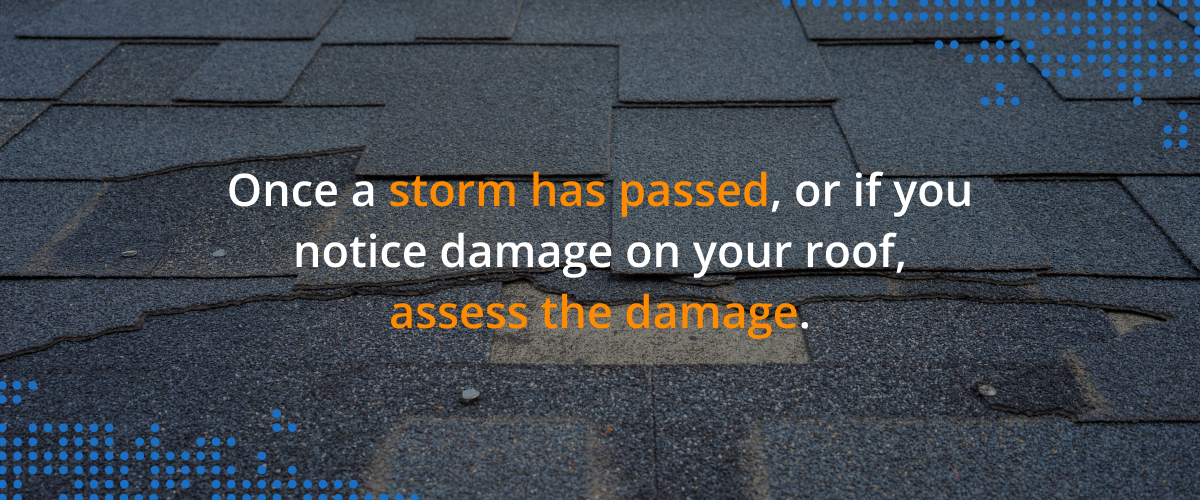
Once a storm has passed, or if you notice damage on your roof, assess the damage. Walk around your home and look for any troubling signs safely from the ground.
Look inside where roof damage may also be observable, and take pictures, notes, and videos of any issues you may see that you can share with your insurance company.
Reach Out to the Insurance Company
Once you notice and document damage to your roof that you believe will warrant the involvement of insurance, don’t waste time and call your insurance company as soon as possible. You want to begin your claim immediately and avoid leaving time for the damage to worsen or sit long enough that the cause is unclear.
We recommend you only fix up or clean something once the damage has all been well documented and your insurer is aware and has the proper documentation.
Get an Estimate
We recommend you contact a roofing company independently and not rely solely on the insurance adjuster. Research to find a trustworthy and reputable roofing company to inspect your home. They will assess and document whatever damage may be present and give an estimate of the repair costs.
This professional estimate will give you an idea of anticipated costs and deter the insurance company from lowballing you. Get the estimate from the roofing company first, and then have your insurance adjuster come out to your home and do their assessment and estimate.
If your claim gets denied or seems unreasonably priced, there are some steps you can take. If you believe it to be wrongfully denied, you can go to your insurance company and file a claim dispute and file a complaint with your state insurance department if you think it’s necessary.
You can also hire a public adjuster to assess the roof and the cause of the damage unbiasedly. If they have a different opinion of the source of the damage than your insurer, then you have a case.

Act
Once the insurance company approves your claim, get the ball rolling on the necessary repairs or replacements. That way, you don’t have to worry about it for too long, and the damage doesn’t progress.
Protect the Roof
You want to avoid further damage to the roof before and after repairs. Take the proper precautions and protection measures after storm damage to prevent it from worsening.
In the future, don’t forget the regular upkeep, annual inspections, and maintenance to keep your roof in tip-top shape.
A Trusted Legacy
When you have work done on your home, you want it to be from trusted experts. When dealing with insurance companies and getting documents and estimates from a roofing company for the claim, you also want it to be from trusted experts.
Legacy Repair is a team of trusted and seasoned Arizona roofing experts specializing in roof repair and maintenance. Whether you are beginning a large insurance claim or have smaller repair projects you plan to tackle, Legacy Repair can help you get quality roofing work in an efficient timeframe.
Call today at 623-303-0537 to chat about how Legacy Repair can help you with your roofing needs.